Author: admin

  • Repository of Methods, 2 chapters

    Repository of Methods, 2 chapters

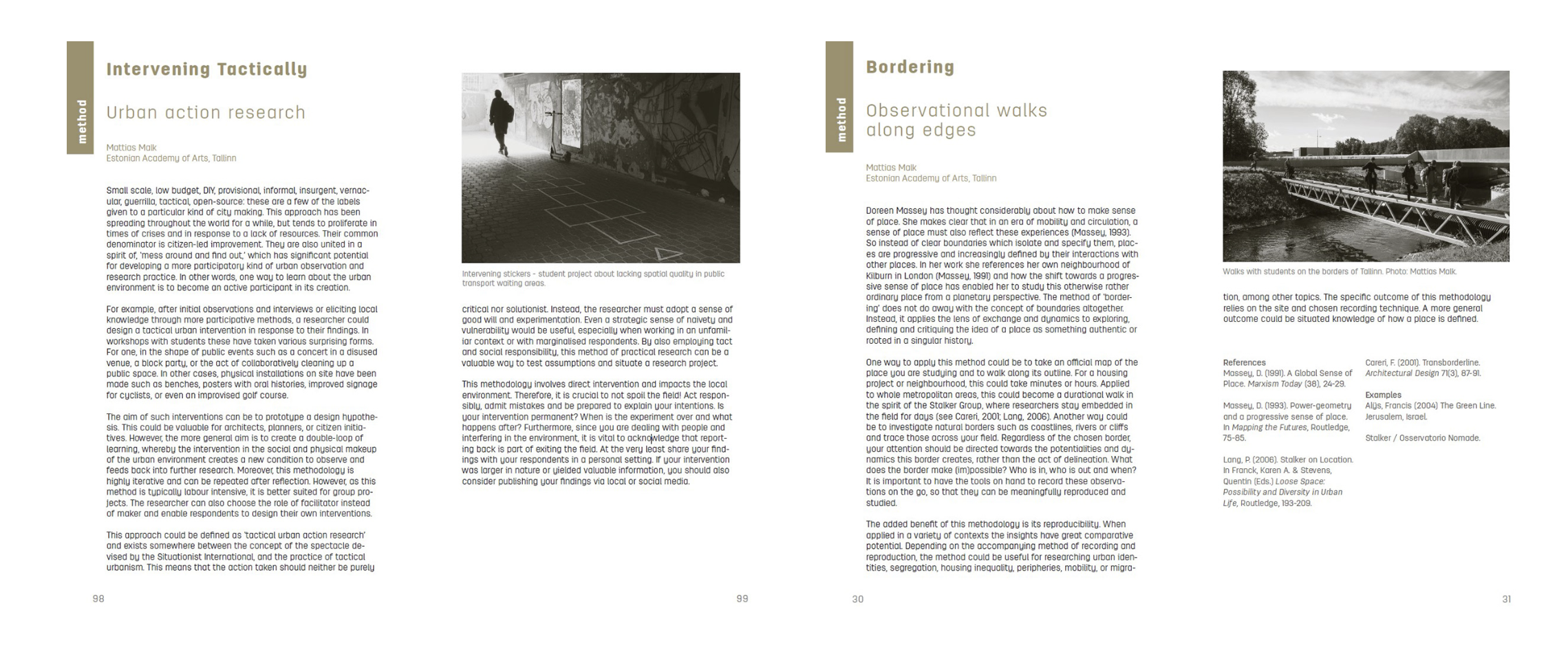
    I wrote two chapters for the “Repository – 49 Methods and Assignments for Writing Urban Places”, published by nai0I0publishers as part of the Writing Urban Places COST initiative.

    This wonderful collection of methods for researching urban contexts was edited by Carlos Machado e Moura, Dalia Milián Bernal, Esteban Restrepo Restrepo, Klaske Havik and Lorin Niculae.

    The full book can be found here.

  • Social responsibility, arts infrastructure, small towns

    Social responsibility, arts infrastructure, small towns

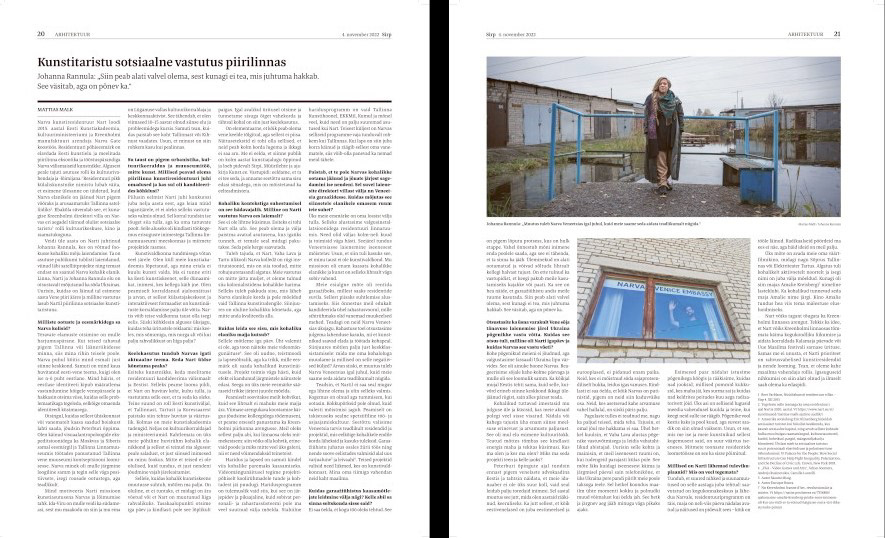
    This was an article for the Estonian cultural newspaper Sirp. I proposed to explore the social responsibility of arts infrastructures in smaller cities on the example of NART in the border town of Narva, Estonia. The interview with NART’s director Johanna Rannula took stock of how under her leadership the organisation has taken a bigger role in the urban space as well as socially. The conversation includes reflections on the border town identity, receiving Ukrainian refugees, and culture-led urbanism.

    You can read the article here (in Estonian).

  • Artishok biennial, 2022, writer

    Artishok biennial, 2022, writer

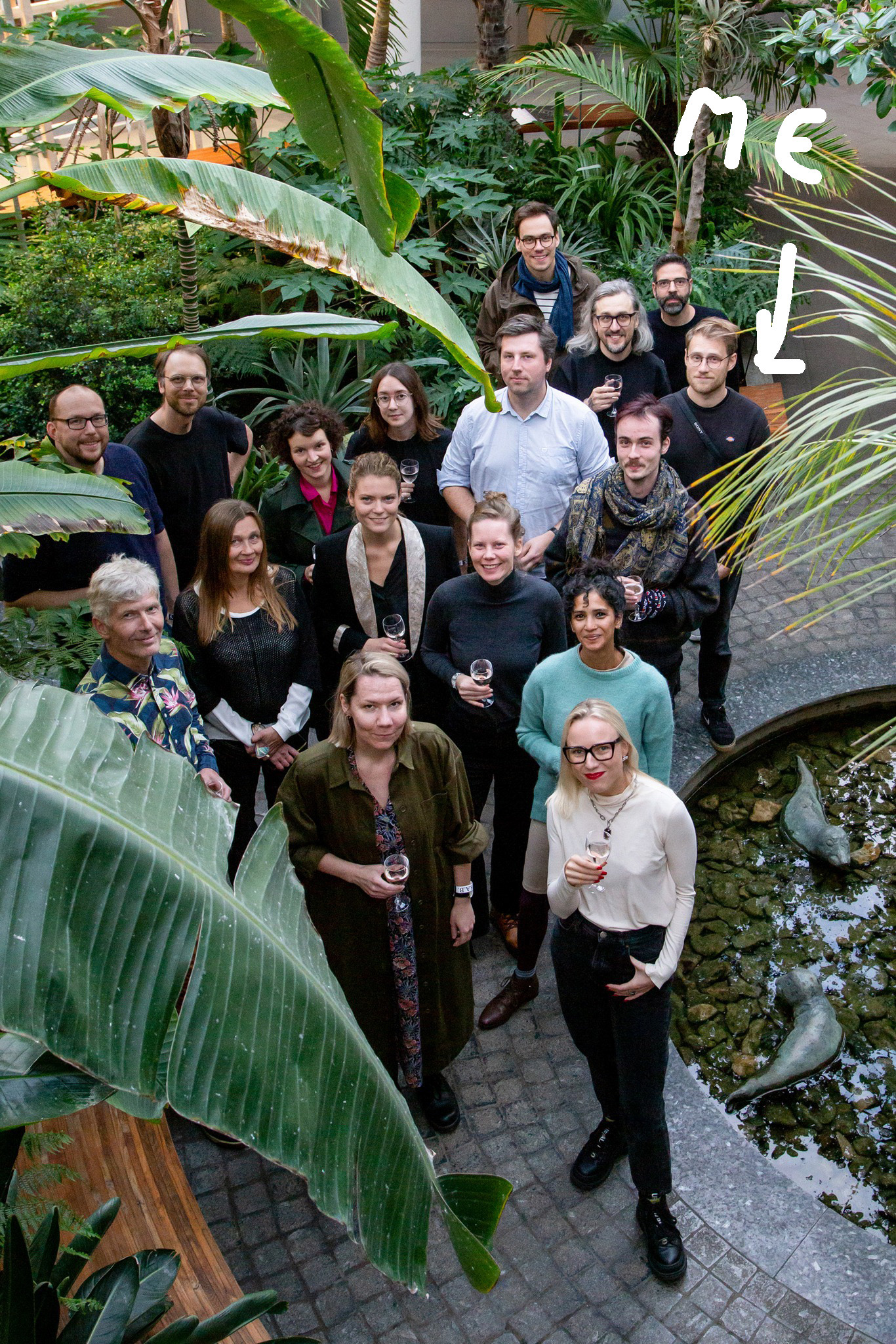
    I was invited to take part in the 8th Artishok biennial as a writer. The Artishok format selects 10 artists to respond to the central theme along 10 writers who are tasked with a critique of each project. The whole process takes about a year and involves the writers being privy to the development of the artists’ ideas and projects. All the texts are revealed to the public at the opening, rather than with a delay as usual in arts critique. My texts were less focused on the artistic qualities of each outcome, but rather on their relation to the context and wider urban fabric. 

    More about the biennial, projects, artists and writers here. 

  • How to direct the course of architecture?

    How to direct the course of architecture?

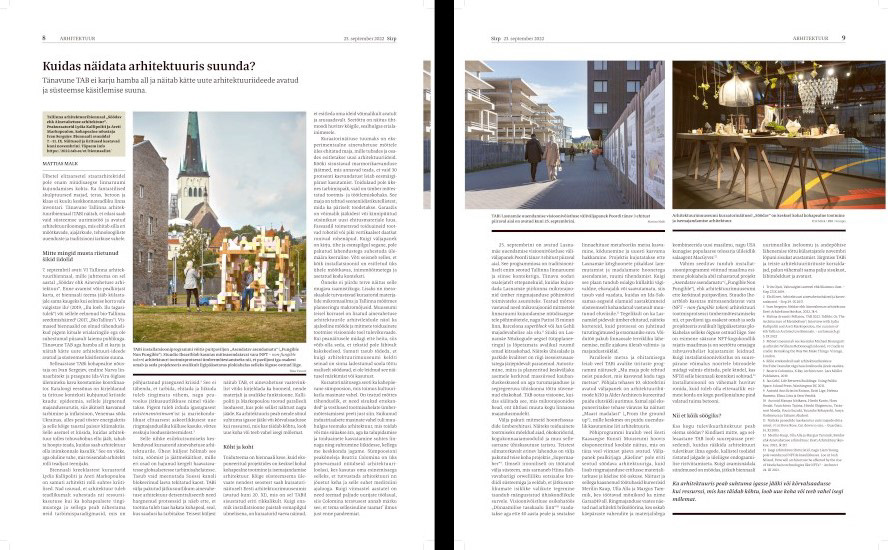
    This was an article for the Estonian cultural newspaper Sirp. I was asked to attend the Tallinn Architecture Biennale and review it. Despite my initial skepticism about the topic and its relevance, I was very pleasantly surprised. The curation and execution was thorough, thoughtful, engaging, and both contextual enough as well as grounded in theory, history and examples to appeal to a range of audiences. 

    You can read the article here (in Estonian).

  • Exhibition about the nonexistent

    Exhibition about the nonexistent

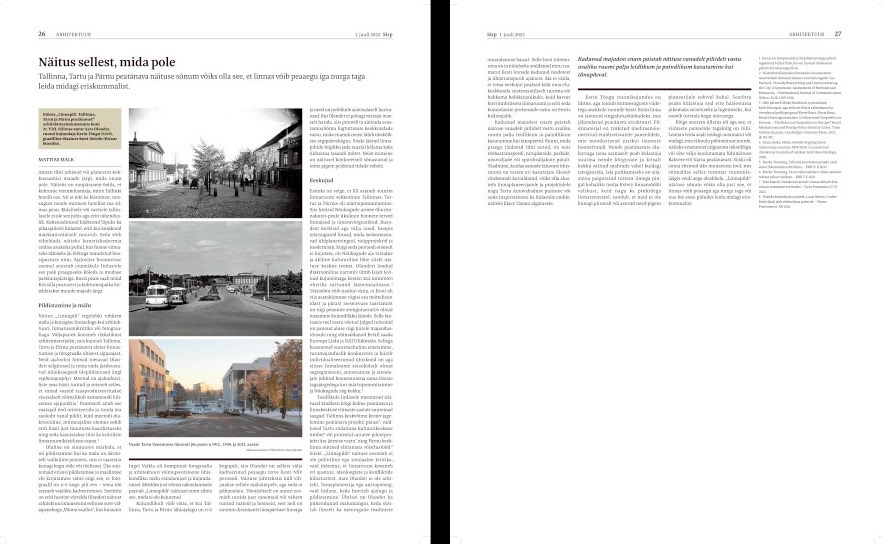
    This was an article for the Estonian cultural newspaper Sirp. The brief was to review a re-photographic project by Aare Olander at the Estonian Architecture Museum. Beyond some knowledge of long-gone buildings, what struck me was the more varied use of streets before planning for the car.  

    You can read the article here (in Estonian).

  • Rail Baltic Tallinn terminal – academic article

    Rail Baltic Tallinn terminal – academic article

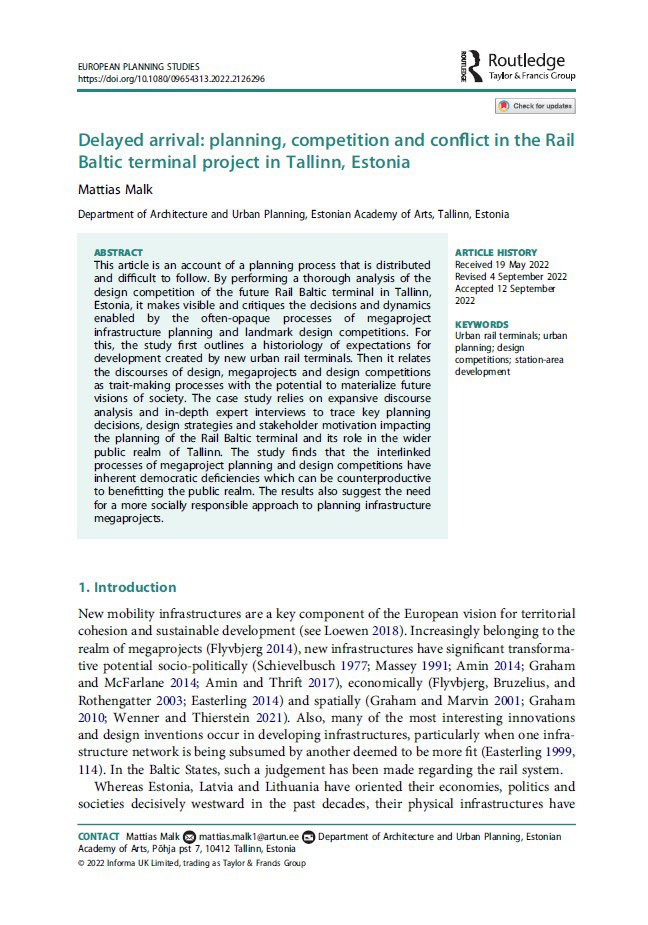
    This was an academic article written as part of my PhD thesis about the planning of Rail Baltic. The article title is: Delayed arrival: planning, competition and conflict
    in the Rail Baltic terminal project in Tallinn, Estonia. It was published in European Planning Studies in September, 2022.

    Abstract:

    This article is an account of a planning process that is distributed and difficult to follow. By performing a thorough analysis of the design competition of the future Rail Baltic terminal in Tallinn, Estonia, it makes visible and critiques the decisions and dynamics enabled by the often-opaque processes of megaproject infrastructure planning and landmark design competitions. For this, the study first outlines a historiology of expectations for development created by new urban rail terminals. Then it relates the discourses of design, megaprojects and design competitions as trait-making processes with the potential to materialize future visions of society. The case study relies on expansive discourse analysis and in-depth expert interviews to trace key planning decisions, design strategies and stakeholder motivation impacting the planning of the Rail Baltic terminal and its role in the wider public realm of Tallinn. The study finds that the interlinked processes of megaproject planning and design competitions have inherent democratic deficiencies which can be counterproductive to benefitting the public realm. The results also suggest the need for a more socially responsible approach to planning infrastructure megaprojects.

    Link to published article.
  • Rotermanni – The city of houses

    Rotermanni – The city of houses

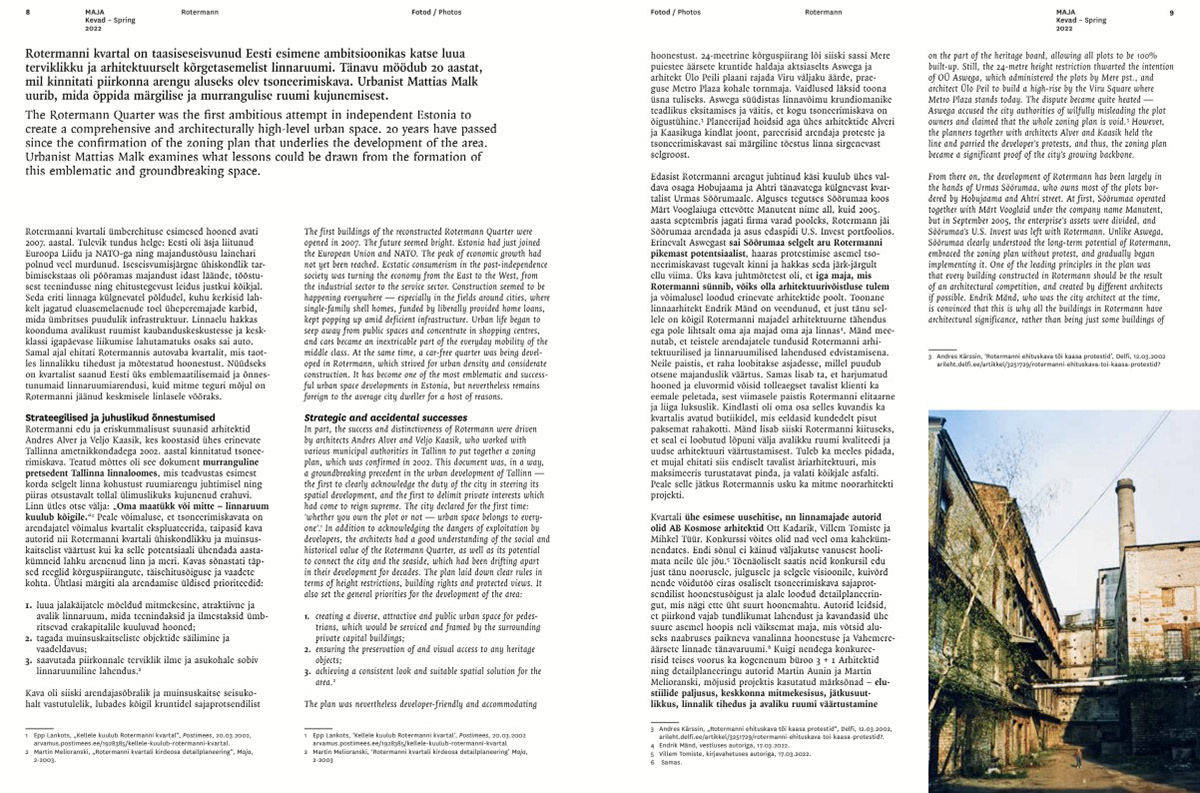
    This was an article for the Estonian architectural review MAJA about key development in Tallinn. It outlines how the Rotermanni quarter developed, its significance, and some of its ails supported by interviews. The key finding is that while groundbreaking in Estonia in terms of its car-free planning aspirations and renovation strategies, it lacks the kind of variety of uses a true district can have (as it is a single developer project).

    The review (in Estonian and English) can be bought here and in some time it will also be made publicly available for free.

  • Curated and Catered

    Curated and Catered

    This is an illustrated article on the changing Estonian countryside commissioned by the Nordic and Baltic Sea region research and design think tank LABLAB. It was a welcome challenge to consider the “rural” in addition to my habitual “urban”.

    The article can be read and seen in full on the LABLAB website. 

  • Public discussion in a’la Tallinn

    Public discussion in a’la Tallinn

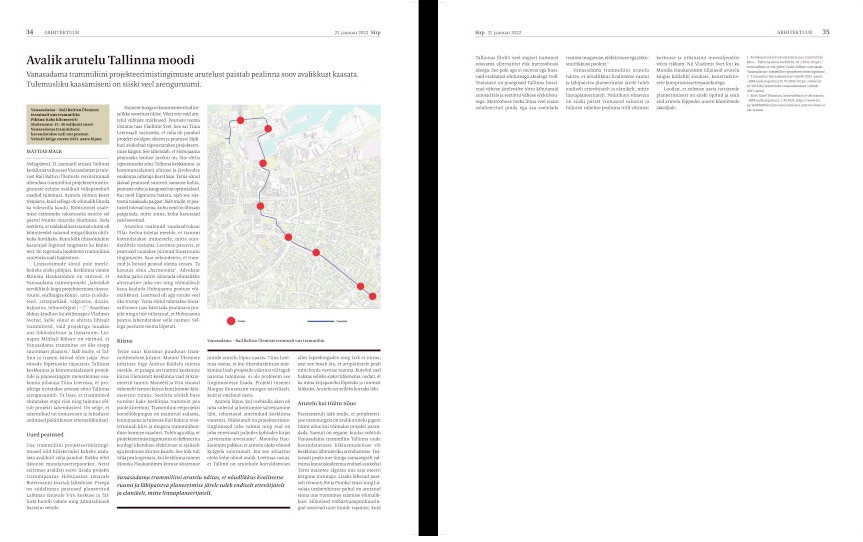
    This was an article for the Estonian cultural newspaper Sirp. The brief was to attend a public hearing regarding the planning of a key tram link in Tallinn, Estonia. Whereas the discussion displayed some willingness for participative planning from the side of the municipality, there is still a way to go to seriously involving public opinion. 

    You can read the article here (in Estonian).

  • What is a Soft City? Interview with David Sim

    What is a Soft City? Interview with David Sim

    This was an article for Estonian cultural newspaper SIRP. The aim was to discuss the book “Soft Cities” with author David Sim. I tried to understand the similarities and differences with Jan Gehl’s work on “Cities for People” – especially as Sim has previously worked in Gehl’s practice. 

    The full article can be accessed here (in Estonian).